
As an experienced stucco contractor working across the Lower Mainland, J & K Stucco handles the full range of repair work Vancouver’s climate throws at exterior walls — cracking, staining, soft spots, and sections where the finish coat has started separating from what’s underneath. Stucco repair Vancouver property owners call us for usually falls into one of a handful of categories, and getting the diagnosis right up front is what determines whether a repair actually holds. We don’t quote a job until we know what’s happening behind the surface, not just what’s visible on it.
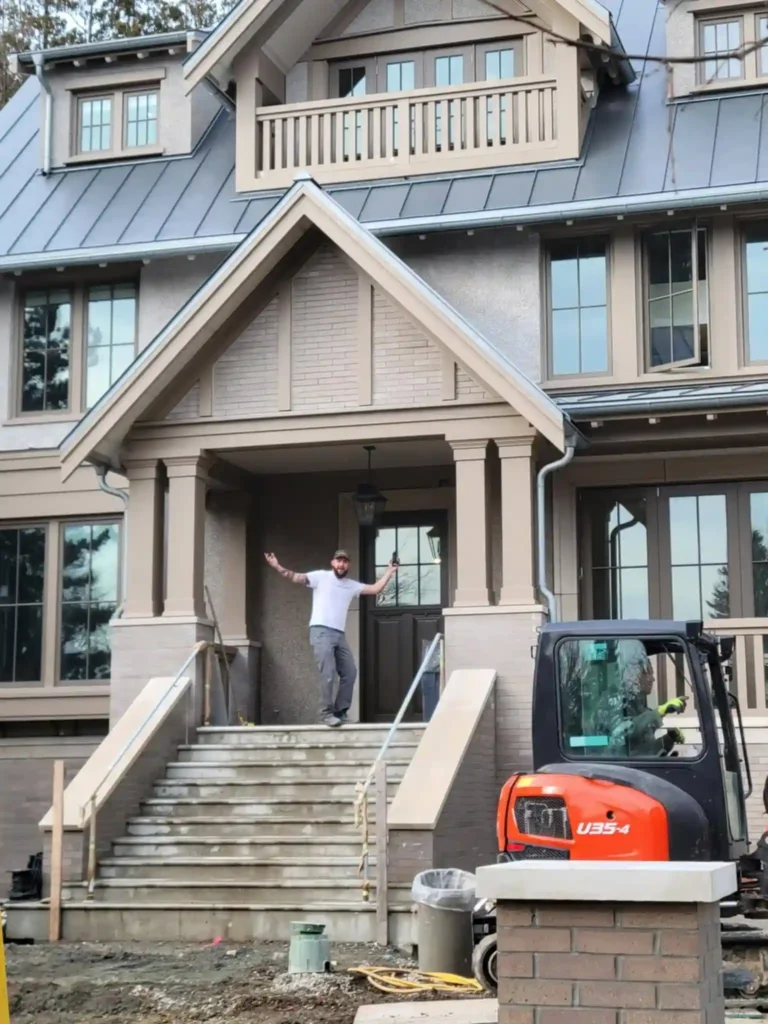
Vancouver’s rainfall is the biggest factor behind most of the repair calls we get. Persistent coastal moisture keeps wall assemblies wet longer than in drier climates, and winter freeze-thaw cycles put repeated stress on cracks that are already there, widening them season over season. The Portland Cement Association notes that drainage behind a stucco assembly is critical in high-moisture environments, and that’s essentially the condition Vancouver presents for most of the year. Homes without a properly detailed weep screed or drainage plane tend to show water damage years before a comparable home in a drier region would.
North- and west-facing walls tend to hold moisture longer since they get less direct sun to dry out between rain events, so we often see repair calls concentrated on those elevations first. Homes built before the mid-2000s, before the building code changes that followed the Leaky Condo Crisis, are also more likely to have building paper or flashing details that don’t meet current drainage standards, even if the stucco itself looks fine on the surface. That’s part of why a visual inspection alone isn’t enough for us to quote a repair with any confidence — we need to know what’s happening behind the finish coat, not just what the wall looks like from the sidewalk.
At J&K Stucco, we are your trusted stucco contractor for every project—whether it’s stucco installation, stucco repair, or full stucco restoration. Our team carefully assesses each property, evaluating the type of stucco, substrate condition, and building structure to provide accurate quotes, reliable timelines, and lasting results.
We specialize in both traditional stucco and EIFS (Exterior Insulation and Finish Systems), delivering energy-efficient, durable, and visually appealing exteriors for homes, businesses, and multi-family residences. As a leading stucco company in Vancouver, we also offer stucco painting, renovation, and custom stucco solutions. Our commitment to quality craftsmanship and attention to detail makes us the top choice for property owners searching for stucco contractors near me or local stucco contractors.
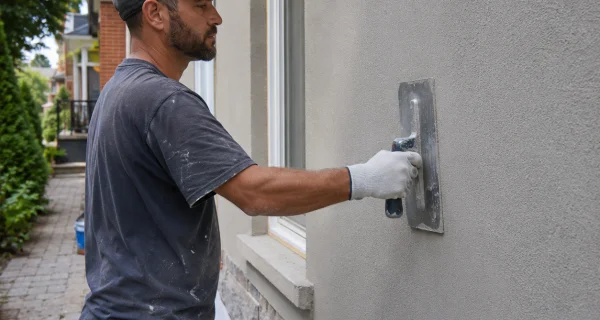
New installation is where the assembly matters most. We install traditional three-coat stucco (scratch, brown, finish) over building paper and self-furring lath, or synthetic EIFS systems depending on the design and budget. Our stucco installation services include weep screed detailing at the base of the wall, proper control joint placement, and flashing integration around windows and doors — the details that determine whether a wall lasts fifteen years or fifty.
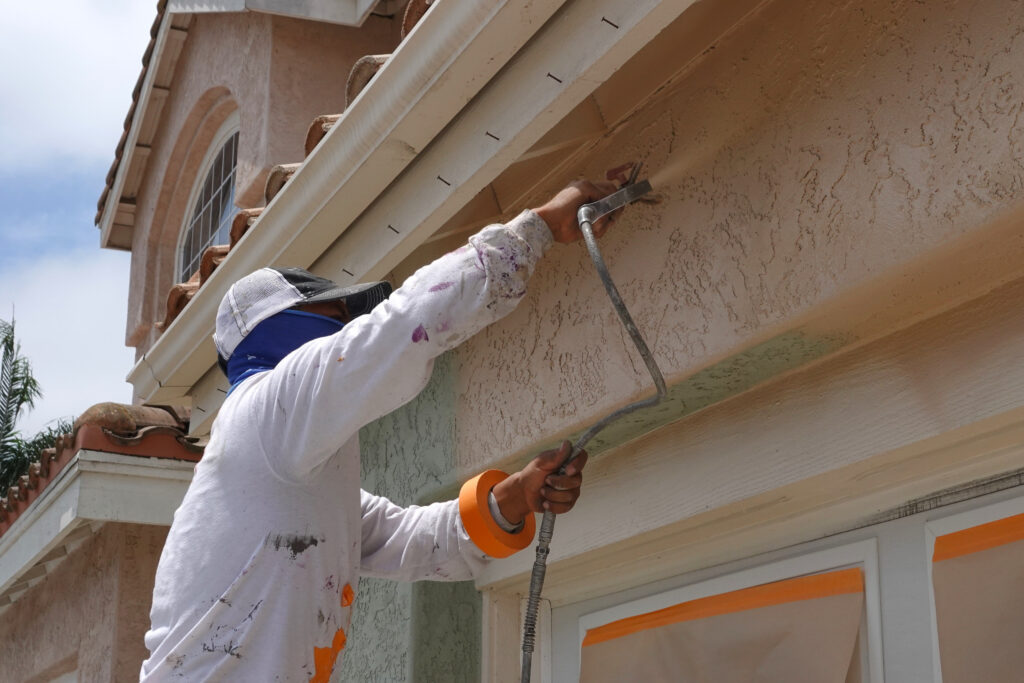
Most of our repair calls start the same way — a homeowner notices a crack, a soft spot near a window sill, or staining that wasn’t there last winter. We diagnose whether it’s surface cracking in the finish coat or something deeper in the lath and building paper before recommending a fix. Our stucco repair in Vancouver work includes patch repairs, re-stuccoing damaged sections, and full moisture remediation where water has gotten behind the assembly.
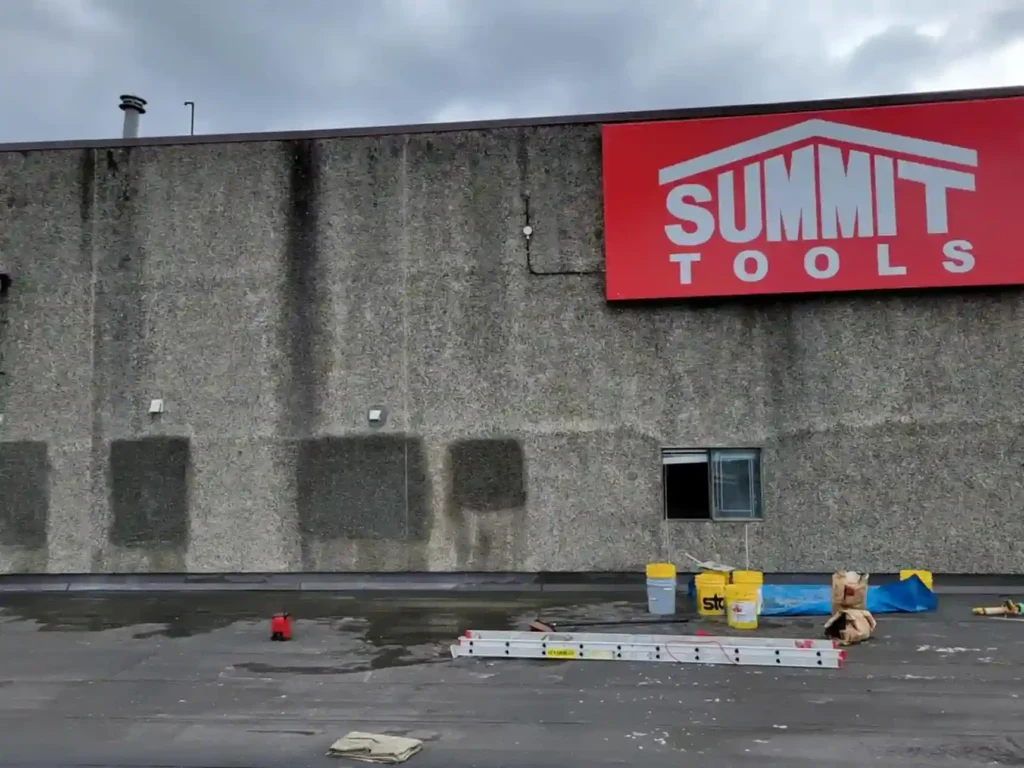
Most of our EIFS installation projects begin with homeowners or property managers looking for better insulation, improved curb appeal, or enhanced weather protection. We assess the building structure, recommend the right EIFS wall assembly, and ensure proper detailing around windows, doors, and rooflines. Our EIFS installation includes complete system installation, reinforced base coats, premium finishes, and energy-efficient exterior solutions built for lasting durability and performance.

Homes built in different decades come with different problems. Older Vancouver homes often have building paper that’s failed or lath that’s rusted through, while newer builds sometimes have EIFS installed without adequate drainage. Our residential stucco solutions start with a wall assembly assessment, not a quote off a photo.

Commercial and multi-unit projects move differently. Strata councils need documentation, phased scheduling around tenants, and often a building envelope consultant involved before work starts. Our commercial stucco contractors work directly with property managers and consultants to keep projects on schedule without cutting corners on the assembly.
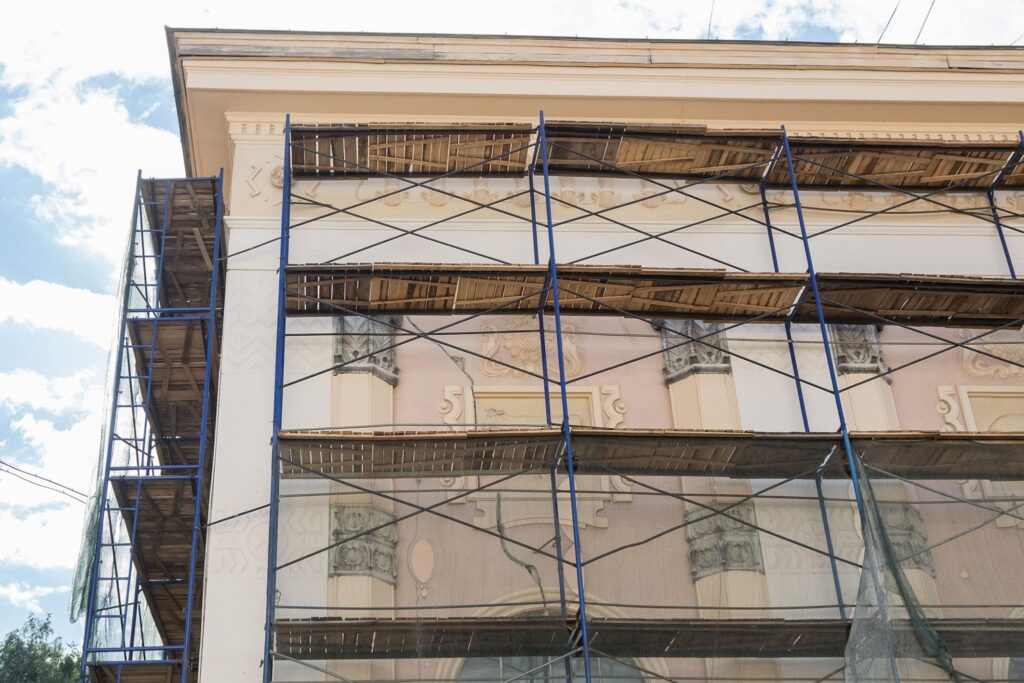
Restoration work is usually triggered by a depreciation report or a failed building envelope inspection. Our stucco restoration services address widespread cracking, delamination, and moisture damage across full elevations, matching texture and colour to existing unaffected sections where the scope doesn’t call for a full re-clad.
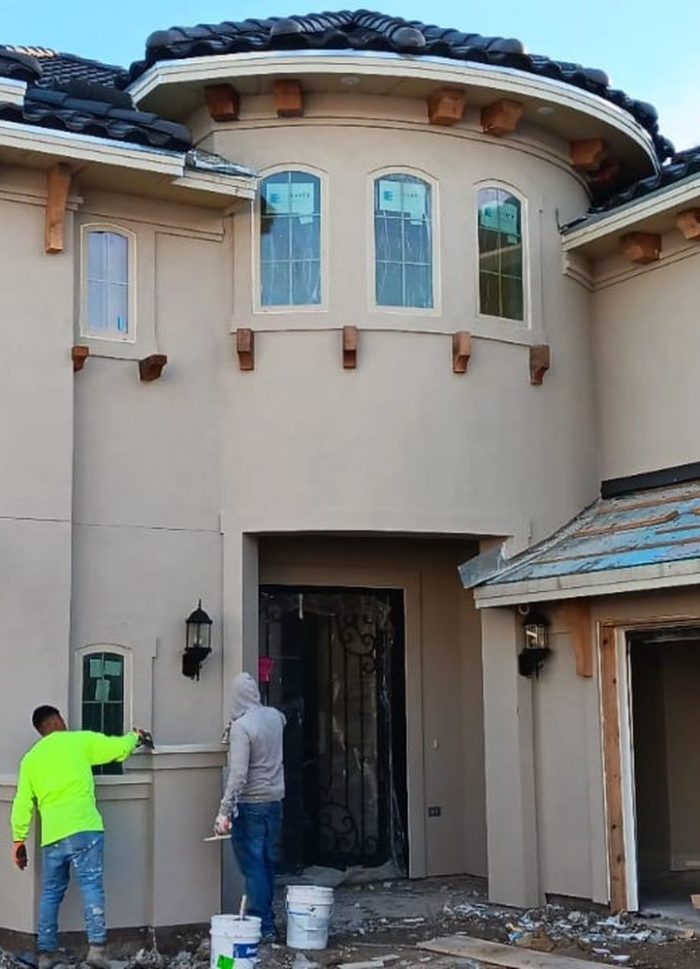
Not every crack or stain needs the same fix, and treating them all the same way is how repairs fail early. Below are the four repair categories we see most often.
Cracked Stucco: Hairline cracking is common and often cosmetic, but wider or spreading cracks usually point to movement in the substrate or a control joint that was never installed. Our approach to repairing cracked stucco starts with figuring out whether the crack is surface-level or structural before we touch it.
Water-Damaged Stucco: Water-damaged stucco is the most serious category, since moisture that’s gotten behind the assembly can rot sheathing and framing long before it shows up on the surface. Repairing water intrusion properly means opening up the wall, drying out the substrate, and correcting whatever let the water in — usually failed flashing or a compromised weather-resistive barrier — before any new stucco goes back on.
Damaged Sections and Patches: Localized damage from impact, settling, or old failed repairs often just needs patching damaged stucco in the affected area rather than a full re-clad. The trick is matching texture and colour so the patch blends into the surrounding wall instead of standing out.
Loose or Separating Stucco: Delamination shows up as stucco layers separating from the lath or from each other, sometimes with a hollow sound when tapped. Repairing delamination means removing the loose material back to sound substrate and rebuilding the assembly properly, since patching over loose stucco just delays the same failure.
Sometimes what looks like a repair job turns into something bigger once we’re into the wall. If the damage covers a large percentage of an elevation, or the existing assembly was never installed with proper drainage, replacing damaged stucco with a new stucco system often makes more sense than chasing patches indefinitely. In other cases, particularly on older homes where multiple elevations have reached the end of their service life, restoring aging stucco across the whole exterior is a more cost-effective path than repeated repair calls every few years.
Most of our repair calls come from single-family homeowners, but our stucco services for homes and our commercial exterior services for multi-unit buildings run on different timelines. A homeowner can usually approve a repair on the spot after a walkthrough, while a strata building often involves a depreciation report, council approval, and coordination around occupied units before work can start. We scope both the same way technically — diagnose first, quote what’s actually needed — but the approval and scheduling process looks different depending on the property type.
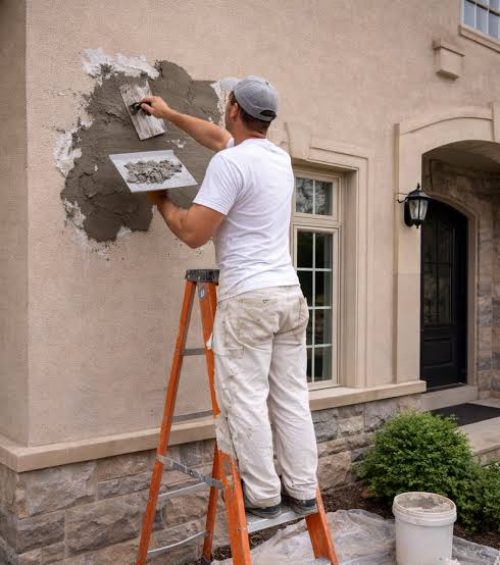
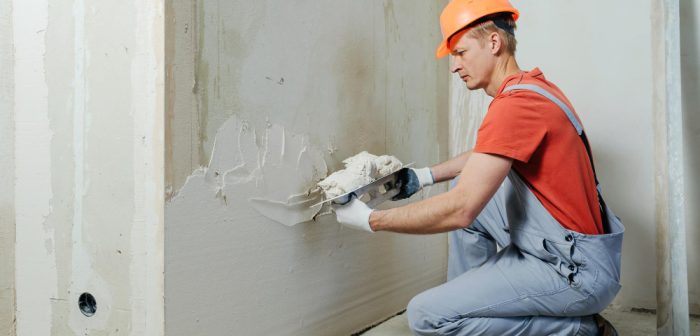
We handle repair work throughout Metro Vancouver, including regular projects for homeowners in Burnaby, where older character homes often need crack and water damage repair. Richmond property owners frequently deal with moisture-related issues tied to the area’s low-lying terrain, and repair work throughout Surrey covers everything from hairline cracking on newer builds to full patch repairs on older properties.
1. Inspection and Diagnosis: We start by examining the damaged area, checking for soft spots and cracking patterns, and where useful, pulling a small test section to look at the condition of the lath and building paper.
2. Moisture Testing: Moisture readings around the affected area tell us whether the damage is isolated or has spread further than what’s visible from the outside.
3. Written Scope: We put together a scope that spells out exactly what’s being removed and replaced, what materials we’re using, and roughly how long the job will take, rather than a vague repair line item with no detail behind it.
4. Removal: Damaged stucco, compromised lath, and failed building paper get removed back to sound material, with the area around the repair protected before demolition starts so debris and dust don’t end up somewhere they shouldn’t.
5. Rebuild: We rebuild in the correct order — building paper, lath, scratch coat, brown coat, finish coat — with proper cure time between each stage.
6. Texture and Color Match: The finish coat is matched to the surrounding wall so the repair doesn’t stand out on the elevation.
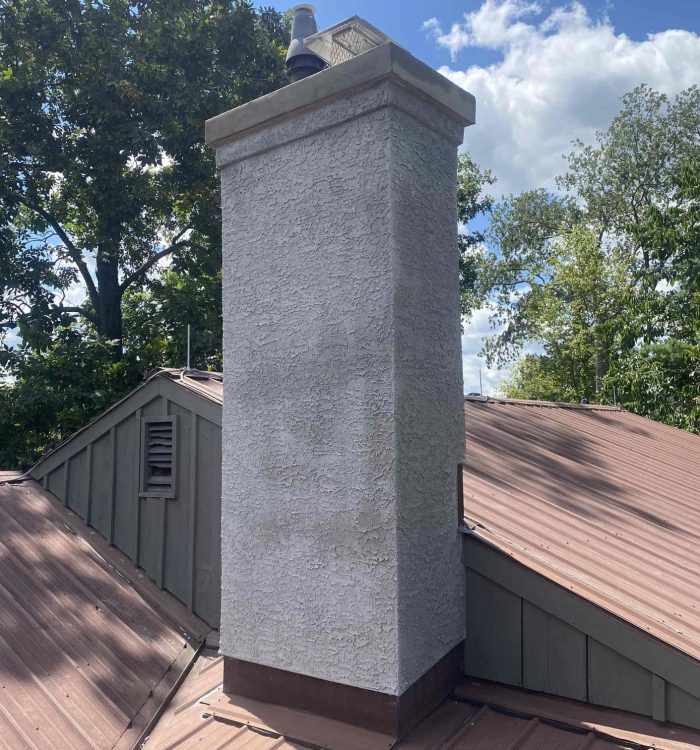
A few warning signs are worth acting on before they turn into a bigger job. Hairline cracks that widen over a season, or that show up in the same spot after a previous patch, usually mean there’s movement happening behind the surface rather than a one-off cosmetic issue. Staining — especially dark streaking below window sills or at the base of a wall — is often the first visible sign of water getting behind the assembly, even when the stucco itself still looks intact. A hollow sound when you tap the wall, or a section that flexes slightly under light pressure, points to delamination, where the stucco has started separating from the lath underneath. Bubbling or blistering on the surface, particularly after a wet winter, can also indicate trapped moisture pushing against the finish coat from behind.
Efflorescence — a white, chalky residue on the surface — is another sign we get asked about often, and while it’s not always serious on its own, it usually means water is moving through the assembly more than it should be. None of these signs require guesswork on your end; if you’re seeing any of them, a proper inspection will tell you whether it’s a minor patch or something more involved.
If you’re not sure whether what you’re looking at needs attention, a few resources can help you figure that out: our guide to common warning signs will walk you through what to look for, and our piece on preventing moisture issues covers how small problems turn into bigger ones if they’re ignored. For upkeep once repairs are done, proper stucco maintenance goes a long way toward avoiding repeat calls.
If you’ve got cracking, staining, or a section of wall that doesn’t look right, don’t wait for it to spread. Request a quote or schedule an inspection with our team, and we’ll tell you plainly what’s going on and what it’ll take to fix it.
An inspection doesn’t cost you anything, and it doesn’t obligate you to book the work. We’ll walk the exterior with you, point out what we’re seeing, and explain why we think it’s happening — whether that’s a control joint issue, a flashing detail that’s failed, or straightforward wear from age and exposure. If the damage is minor, we’ll say so, and we won’t push a bigger scope than the wall actually needs. If it’s more serious, we’ll explain what’s likely happening behind the surface and what it would take to confirm it, including moisture testing where that’s warranted.
Most inspections can be scheduled within a few days, and we’ll usually have a written quote to you shortly after, broken down by what’s being removed, what’s being replaced, and roughly how long the job will take. If you’re comparing quotes from other contractors, feel free to have us look at what they’ve proposed — we’re happy to explain where our scope differs and why. Reach out whenever works for you, and we’ll get a time on the calendar.
Yes, in most cases. Cracking, staining, and small areas of damage can usually be patched or repaired without redoing the whole wall. The exception is when damage is widespread across multiple elevations or the underlying assembly has failed — at that point, repair just becomes a repeated cost, and replacement makes more sense.
It depends on the cause. Most policies cover stucco damage from a sudden event — a storm, a tree branch, impact damage — but not cracking from normal aging, settling, or gradual water intrusion. Long-term moisture damage is usually treated as a maintenance issue, not a covered loss, so it’s worth checking your policy wording before assuming it’s covered.
Not reliably on its own. Old stucco is often contaminated with dirt, efflorescence, or a chalky surface that prevents proper bonding, so a scratch coat or bonding agent is usually needed first. For a durable repair, the old material at the repair site needs to be removed back to sound substrate rather than applying new stucco directly over the existing surface.
The most common one is patching over the surface without checking what’s happening behind it — if there’s trapped moisture or rotted sheathing underneath, a surface patch will fail again quickly. Other mistakes include skipping control joints on larger repairs, rushing cure time between coats, and mismatching texture or colour so the repair stands out. Using the wrong mix ratio for the scratch and brown coats is another one that shows up on repairs done by less experienced crews.
For isolated damage on an otherwise sound wall, repair is almost always the more cost-effective choice. Replacement starts to make more sense when damage covers a large portion of the exterior, the assembly lacks proper drainage, or the stucco has already been patched multiple times in the same spots without holding.
The area around the hole gets cut back to a clean edge, exposing the lath. If the lath is damaged, it needs to be replaced before anything else happens. From there, it’s a scratch coat, a brown coat, and a finish coat applied in layers with proper cure time in between, finished with a texture and color match to the surrounding wall. Skipping any of those layers, or rushing the cure time, is usually why DIY patches fail within a year.
Hairline cracks under about 1/16 of an inch are usually cosmetic and not urgent. You should be more concerned about cracks that are widening over time, cracks running diagonally from window or door corners, cracks paired with staining or a hollow sound nearby, or any crack wider than about 1/8 of an inch — those patterns usually point to movement or moisture behind the surface rather than simple surface aging.
Copyright 2025 | J and K Stucco